Log in



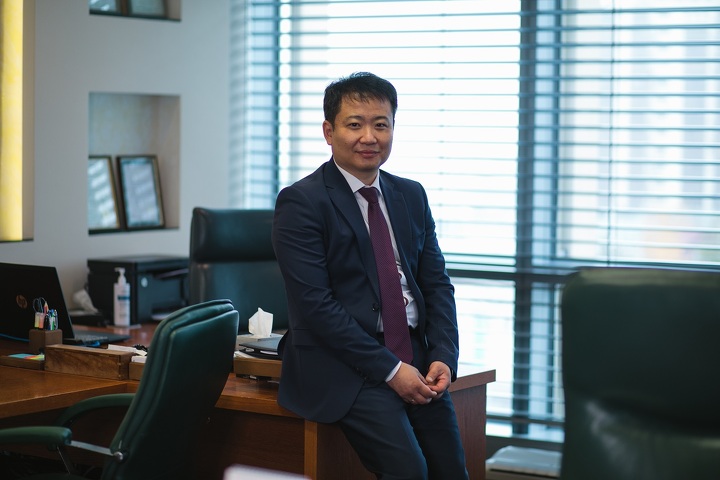
Gennady Kim, Chairman of the Board, discussed the details of the bond placement.
“In order to go public, we had to significantly change the company’s organizational structure,” he noted. “As a result, we created a classic financial institution structure with a management board and a supervisory board, which includes two independent directors in addition to our main shareholder.”
Why did you decide to go public?
We have a sustainable business model that requires development. Previously, pawnshops and microfinance organizations in Kazakhstan were legally prohibited from listing on the stock exchange. Therefore, we relied on our own capital and, occasionally, bank loans. Now, we have been given the legal opportunity to access the stock market, which aligns with our strategy of attracting investment for business development.
We have already received good ratings from Fitch, registered the bond issue with the authorized body, and have been listed on KASE, meaning the bonds are technically ready for placement. We expect to begin the first trading in late October or early November.
How much funding do you plan to raise and under what terms?
We are currently planning to issue three-year bonds for 3 billion tenge with a 14% annual coupon. As the business grows and our funding needs increase, we will offer new bond issues to the market. Two brokers, BCC Invest and ORDA Capital, are assisting with the organization of the debut bond placement.
Why did you choose KASE over AIX?
The KASE bond placement process is well-established and straightforward. The company’s head office is also located in Almaty. The investor base is similar on both platforms, so we don’t see much difference in this regard. However, the Astana International Financial Center platform is also interesting – we recently received an AIFC license, and we’re implementing a new product on this platform: secured online lending.
The securities market legislation stipulates that if a Kazakhstani issuer plans to place bonds abroad, it must have successful experience placing bonds in Kazakhstan. Therefore, after Kazakhstan, we will enter the Russian stock market next year. The ruble bond program will include the possibility of individual issues with maturities of up to 5 years for a total volume of 3 billion rubles.
Some believe that a bond yield of 14% is not very high for a debut issue. Did your brokers advise you on the interest rate for bonds on KASE?
No, it was our decision. The company has a number of significant advantages: firstly, a transparent and understandable shareholder structure; Secondly, the financial statements are confirmed by a multi-year audit by KPMG; thirdly, the company does not have a large debt burden; fourthly, it has strong financial indicators and annual profit growth throughout the company’s existence, even during the pandemic.
As part of a recent nationwide audit of the entire sector, the company passed a comprehensive prosecutor’s inspection without any fines or injunctions. We have no serious complaints from any regulatory agency.
According to the Agency for Regulation and Supervision of the Financial Market, the company ranks fifth among pawnbrokers by asset size and third by loan portfolio (in this indicator, the company actually ranks second, as the first and second positions are held by two sister organizations). In fact, our company is the only large universal pawnshop in Kazakhstan offering loans secured by gold jewelry and cars.
The company’s risk management system enables sustainable development by controlling external and internal risks. Currently, we are the only pawnshop in Kazakhstan rated by the international agency Fitch Rating.
What is the target audience for your bonds?
We focus on our brokerage partners and individuals who understand the securities market—who are increasingly turning to the bond market. Deposit rates are falling, and the returns we offer are more attractive to them.
Seif-Lombard is a retail company; we issue loans to individuals and issue bonds for them as well.
What are your borrowed funds for?
- For comprehensive business development. Our product is a consumer microloan. The average loan size is 150,000 tenge, with jewelry loans collateralizing the average bill being 100,000 tenge, and cars collateralizing the average loan size is approximately 2 million tenge. We serve 60,000-80,000 clients monthly.
The raised capital will primarily be used for developing our current operations.
Car collateral loans are a relatively new product, launched in 2019, and are increasingly in demand. We’ve developed a business model for it, understood all the risks, and are ready to invest.
We are experiencing steady growth in our locations, and maintaining this growth requires resources.
This year, we opened two new branches – in Karaganda and Aktobe – bringing our total to ten. However, the company doesn’t yet have a presence in every region of the country, primarily in the south, so there’s room for expansion. The strategy is to continue developing the retail network and increase the size of the business by 6-10 times over the next five years.
Is your business strategy limited to Kazakhstan?
- This year, we opened a subsidiary in Uzbekistan. This market is very interesting; it’s not as developed as Kazakhstan, but there are opportunities there. Just compare: there are 594 pawnshops operating in Kazakhstan, while Uzbekistan has about 30.
Recently, our legislation has been significantly tightened for the financial market. And you, it seems, are becoming more comfortable working with the regulator?
- Yes, it has become easier because clear rules have been established and, at the same time, dubious players have been weeded out of the market. This is good not only for the regulator but also for clients, who gain access to higher-quality services: previously, there were over 2,000 pawnshops in Kazakhstan, sometimes with questionable status and reputation, but after the introduction of licensing and thorough inspection by the Agency for Financial Market Regulation and Financial Markets of the Republic of Kazakhstan, there are now only 594. I think this number will decrease. Yes, some companies are uncomfortable with rigorous audits from the regulator, but we’ve always conducted business lawfully and transparently, so working with the regulator isn’t something new for the company, but rather standard practice. This is one of the reasons we’re confidently pursuing a stock exchange listing.